

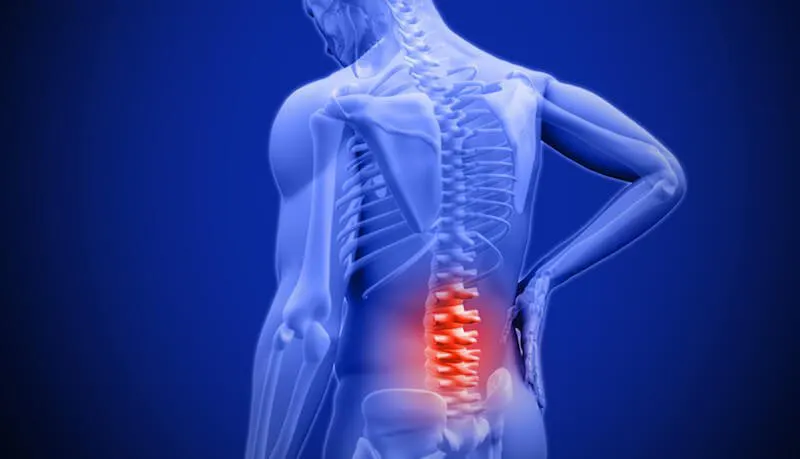
Your spine houses your spinal cord, a bundle of nerves that carries messages between the brain and the body. If these nerves are compressed or damaged, it can lead to pain, restricted range of motion, muscle weakness, and dysfunction throughout the body. The discs between each vertebra serve as shock absorbers for the spine, allow for flexibility, and create space for the nerves to exit the spinal cord and service the body. They have a tough, fibrous outer layer surrounding a soft, gel-like center. Due to wear and tear, these discs can start to wear out and even collapse, putting pressure on the adjacent nerves and causing pain, numbness and tingling, muscle weakness, loss of sensation, and other nerve dysfunction.
A bulging disc occurs when the disc’s outer layer weakens or becomes damaged. As a result, the disc protrudes or bulges outward, extending beyond its normal boundaries. The bulge may press against nearby nerves or spinal structures, potentially causing pain and other symptoms. If the outer layer becomes so weak that it tears, the gel-like center can seep out of the disc and apply direct pressure on the nerves. This is a disc herniation.
Treatment for disc injuries, like a disc bulge or herniation, can vary widely. The traditional medical approach to treating disc injuries involves drugs and surgery to remove damaged tissue. The chiropractic approach presents a much sought-after alternative. Chiropractic offers a natural, non-invasive approach to correcting musculoskeletal problems and optimizing the nervous system to function and heal better.
$99 New Patient Special
Includes Consultation, Thorough Physical Exam, Review Health History, Posture Analysis & Full Report Of Findings.
How Our Care Plan Works
1. Real Answers
Once you have decided to take control of your health, we can begin your journey to living pain free. We start with an incredibly in-depth consultation, health history and exam. This is what builds the foundation for an accurate diagnosis. This is truly the basis for so many treatments not working for people. Doctors often rush to diagnose a patient, and then apply a treatment program that will not work, because a correct diagnosis has been missed. Our methods make sure we have the cause of your issue, and can apply an appropriate treatment.
2. Real Plan
Once we have a real and accurate diagnosis, we can then discuss the proper treatment options, and how effective and appropriate they are for your specific condition. There may be several ways to get to your desired end point, and you will be involved in deciding how we go along that path.
3. Real Results
With an accurate diagnosis, and an appropriate treatment in place, we can begin start getting you to the life you desire. Not only will you have effective treatment in our office, but you will be given the tools and knowledge of how to treat your own pain anywhere you happen to be. All the knowledge you need to have lasting, effective results and the life you deserve will be at your disposal.
What is Spinal Decompression Therapy?
Spinal decompression therapy reduces spinal pressure by moving the discs back into place and realigning the joints. This can be done through traction, a method that uses stretching and pulling to relieve stress on the spine. A traction table slowly pulls the patient, stretching their spine and relieving pressure on the discs. This can alleviate pain and, more importantly, allow the discs to rehydrate and heal. In the case of a bulging or herniated disc, the soft center, no longer feeling the pressure, can reabsorb into the disc, and the outer layer has the chance to heal.
A decompression session can take 10-15 minutes and is pain-free. Many patients report that decompression feels good, as it relieves stress on the spine that is causing pain and other symptoms.
Common conditions and symptoms that are effectively treated by spinal decompression include:
- Sciatica
- Herniated disc
- Bulged disc
- Spinal stenosis
- Degenerative disc disease
- Arthritis
- Ankylosing spondylitis
- Back pain
- Neck pain
- Shoulder pain
- Elbow pain
- TMJ
- Headaches
Who Can Benefit From Spinal Decompression?
Athletes, office workers, seniors, people injured at work, auto accident injury victims, and anyone suffering from back pain may benefit from this form of therapy.
Spinal decompression therapy may help athletes’ performance, flexibility, pain relief and recovery, and muscle soreness.
Office workers, or anyone sitting for long periods, may be in danger of developing spinal compression through the pressure from prolonged sitting and bad posture.
Seniors typically deal with spinal issues as their bodies age, and their discs deteriorate. The therapy can help slow down this process and strengthen muscles and tendons, resulting in better flexibility and range of motion.
Accident victims can also benefit from spinal decompression therapy if they have some spine-related trauma.
Benefits of Spinal Decompression and Chiropractic Care
You can reduce back pain by decompressing pressure on nerves, muscles, and discs in your spine through spinal decompression therapy. It is easier to treat problems through this type of therapy as fewer risks are involved. There is no need to take time off of work to recover. In just 10-15 minutes, decompression can reduce muscle spasms and improve muscle strength and flexibility.
Spinal Decompression Therapy helps to improve your circulation by increasing blood flow to the area and allowing your heart to pump more efficiently. You will feel less tired after treatment as a result. You can move more freely and possibly even notice a change in your posture if you have upper back, neck, and shoulder issues.
Spinal decompression therapy is combined with chiropractic care to help patients improve their flexibility, range of motion, and overall health. You can see improvements after only a few treatment sessions, empowering you to return to your daily activities more efficiently.
Check Out Our Location Near You
536 Perry Rd Suite 6, Grand Blanc, MI 48439
Frequently Asked Questions
What is spinal decompression therapy?
This particular type of therapy is non-invasive and aims at reducing back or neck pain by gradually stretching the spine to reduce pressure on nerves by alleviating tension on spinal discs.
How does spinal decompression work?
Spinal decompression uses a mechanical device in providing traction to the spinal discs in order to encourage the intake of oxygen, water, and nutrients by the discs.
What conditions can be treated with spinal decompression?
Individuals suffering from herniated discs, bulging discs, degenerative disc disease, sciatica, facet syndrome, back pain, neck pain and spinal stenosis can benefit from decompression therapy.
Does spinal decompression therapy hurt?
Spinal decompression therapy is generally not painful, is mostly comfortable and, in most cases, painless. The patient might, however, feel some gentle stretching pressure during the procedure.
How many decompression sessions are needed and what is the outcome?
Usually, it is recommended to go through a course of 20 – 25 decompression sessions. The outcome varies from patient to patient but most patients report that they feel significant reduction in pain and an improvement in overall mobility.
$99 New Patient Special
Includes Consultation, Thorough Physical Exam, Review Health History, Posture Analysis & Full Report Of Findings.